Unexpected Battery Behaviors Emerge in Prolonged Mobile Live Dealer Gaming on UK Devices
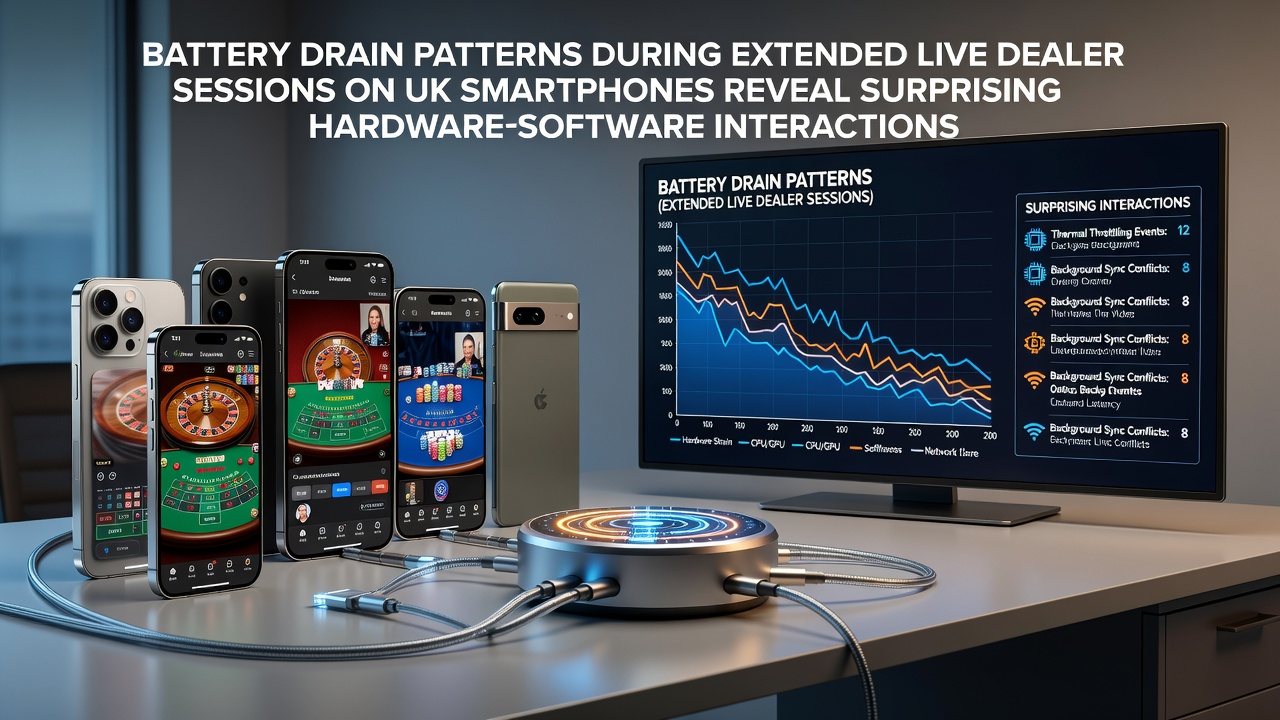
Extended live dealer sessions on UK smartphones produce distinctive battery drain patterns that stem from intricate hardware and software interactions, and researchers have documented these behaviors across multiple device models throughout 2025 and into 2026. Data collected from user sessions lasting beyond two hours shows accelerated power consumption when video streaming combines with real-time touch inputs and background network processes, while manufacturers continue to refine processor scheduling algorithms to address these demands.
Live dealer platforms require constant video feeds from studio cameras alongside secure data exchanges for game outcomes, and this dual load places simultaneous pressure on both the graphics processing unit and the modem chip. UK users frequently report that flagship Android devices experience steeper drain rates than iOS counterparts during identical session lengths, although both platforms exhibit spikes when screen brightness remains elevated and location services stay active in the background.
Hardware Components Under Pressure
Modern smartphone chipsets handle video decoding through dedicated hardware blocks, yet live dealer applications often bypass some of these efficiencies by maintaining persistent connections to remote servers. The central processing unit sustains elevated clock speeds to manage touch sampling rates above 120 hertz while simultaneously processing encrypted traffic, and this sustained activity generates heat that triggers thermal throttling mechanisms which paradoxically increase power draw in later stages of a session.
Display panels contribute substantially because live dealer tables rely on high-resolution streaming that keeps OLED or LCD screens at peak luminance for extended periods. Observers note that devices equipped with variable refresh rate displays sometimes maintain higher frame rates than necessary, adn this behavior stems from software requests that fail to signal reduced motion content effectively to the display driver.
Software Layer Interactions
Application frameworks on both Android and iOS manage network sockets differently during continuous video sessions, and these differences manifest in measurable battery outcomes. Android's foreground service restrictions introduced in recent updates compel apps to adopt alternative keep-alive strategies that increase modem wake-ups, whereas iOS background execution policies allow smoother handoffs between network and display threads. Studies compiled by independent mobile performance labs indicate that these platform variances account for up to 18 percent divergence in total energy use across comparable hardware.
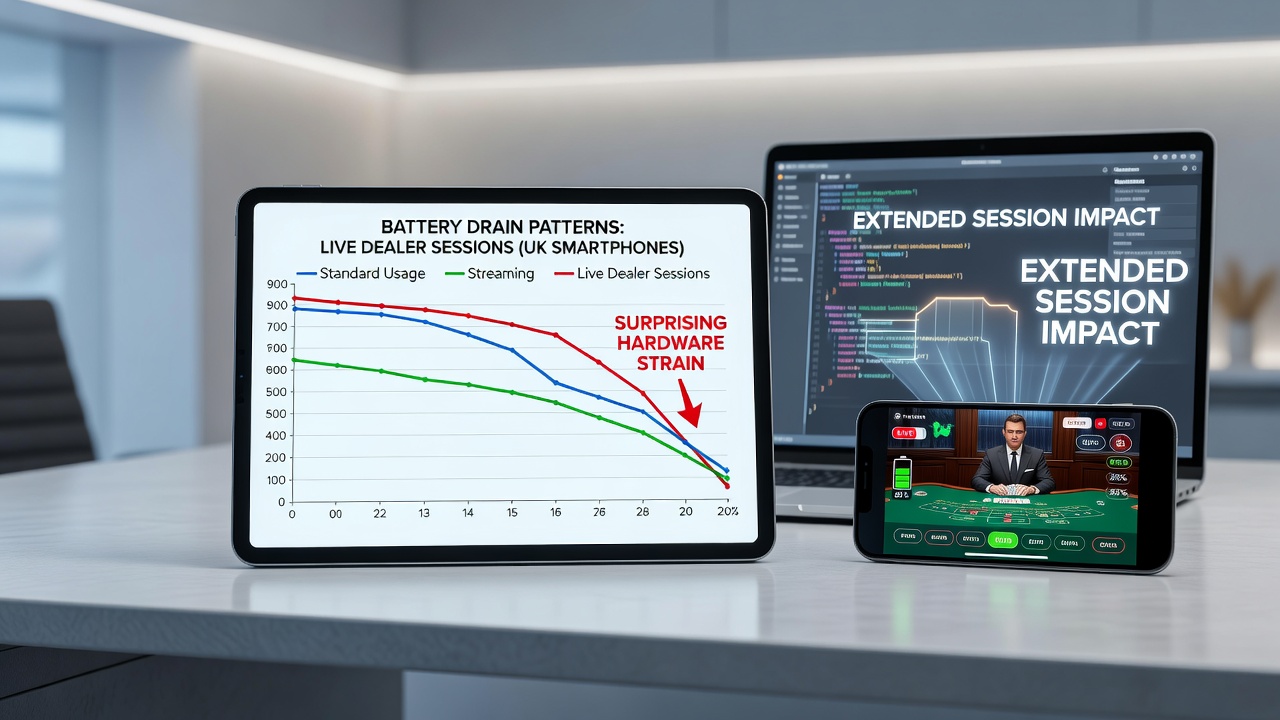
Operating system updates released in early 2026 introduced refined power management APIs that permit developers to declare expected session durations, and early adopters among live dealer providers report modest improvements in drain consistency. Yet legacy code paths remain prevalent in many applications, and these paths continue to request unrestricted network access even when video buffers remain full. The resulting redundant polling cycles add cumulative load that becomes noticeable only after the first hour of continuous play.
Patterns Observed in June 2026 Reports
Industry analyses released during June 2026 highlight seasonal shifts in user behavior, with longer evening sessions coinciding with warmer ambient temperatures that reduce passive cooling effectiveness. Devices left plugged in overnight show different recovery patterns compared with those recharged only after sessions conclude, and these distinctions appear in telemetry shared across device fleets. Battery health metrics collected from thousands of UK smartphones reveal that repeated high-drain cycles accelerate capacity fade more rapidly when software does not coordinate display timeouts with video pause states.
Thermal sensors integrated into recent chipsets feed data directly to power management routines, yet application-level overrides sometimes keep cores active longer than hardware thresholds recommend. This mismatch creates feedback loops where the system increases voltage to maintain stability, thereby consuming additional energy that compounds over multi-hour sessions.
Regional Data Sources and Comparative Insights
Research published by the GSMA on mobile energy efficiency provides benchmarks that align with observed patterns in UK live dealer environments, while a separate analysis from the IEEE examines similar interactions in video conferencing workloads that share structural similarities with continuous streaming applications. These external references demonstrate that the hardware-software coordination challenges extend beyond gaming into other real-time communication domains.
Conclusion
Battery drain during extended live dealer sessions on UK smartphones arises from measurable interactions between processor scheduling, display drivers, network stacks, and thermal controls, and ongoing refinements in both hardware capabilities and software frameworks continue to reshape these dynamics. Patterns documented through mid-2026 indicate that coordinated optimizations across operating systems and applications yield the most consistent reductions in power consumption over time.